
Climate Emergency
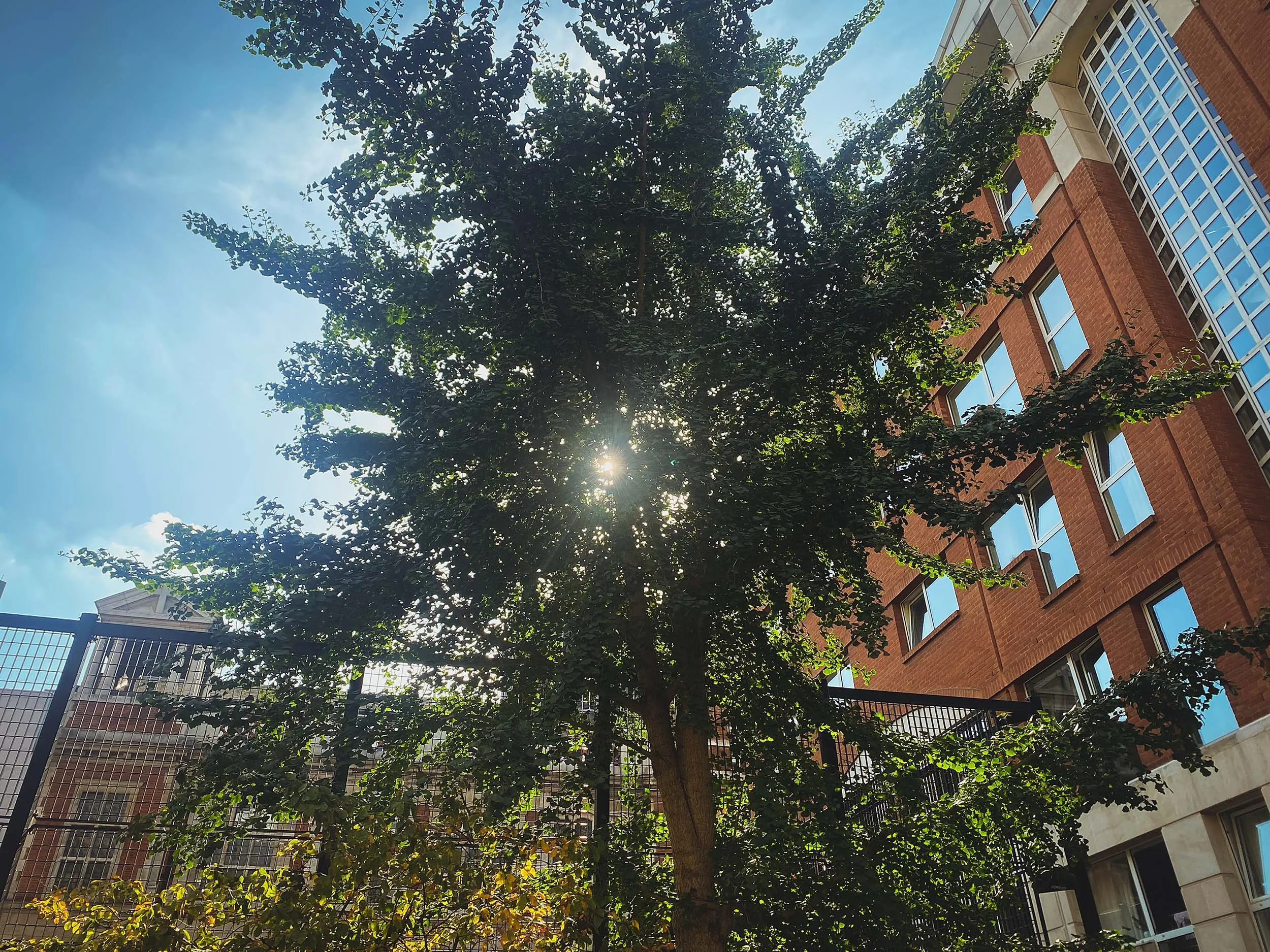
Westminster has some of the highest carbon emissions and worst air pollution in the UK. The Playground is suffering from the effects of long term habitat and biodiversity loss and excess heat trapped between buildings creating an Urban Heat Island - only exceptionally rarely are there any butterflies, bees, or any other insects to be seen.
‘Cities and towns have a smoothing effect on biodiversity, tending to favour generalist species like feral pigeons. Those that require a particular habitat, or are intolerant of disturbance or pollution, often can't survive. This is called biotic homogenisation. Animals and plants that can only live in one small area of land - like unique butterflies or flowers - can go locally extinct if the city's conditions are unfavourable to them.’ - Natural History Museum
Westminster City Council’s Climate Emergency Action Plan, and Fairer Westminster and Fairer Environment Plans set out actions for reducing carbon emissions across Westminster, working in partnership with businesses, communities and residents.
These include delivering the Greening Westminster programme to assist community groups in improving their green spaces through increased funding and project support. Local resident and charity trustee Max Lacey was granted £27,080 in 2023 to deliver the ‘2022-2027 Project’ to regenerate the soil and replant the Playground.
Overall tree canopy cover for the 20,000 trees the City of Westminster owns was 16.17% in 2018. The Council plans to maintain, plant, and protect the trees and inspire residents, communities and organisations to increase tree planting — targeting a 10% increase of existing canopy cover by 2050. In March 2024 we planted the Playground’s first new trees in decades to create the Community Orchard, donated by The Conservation Volunteers (TCV).
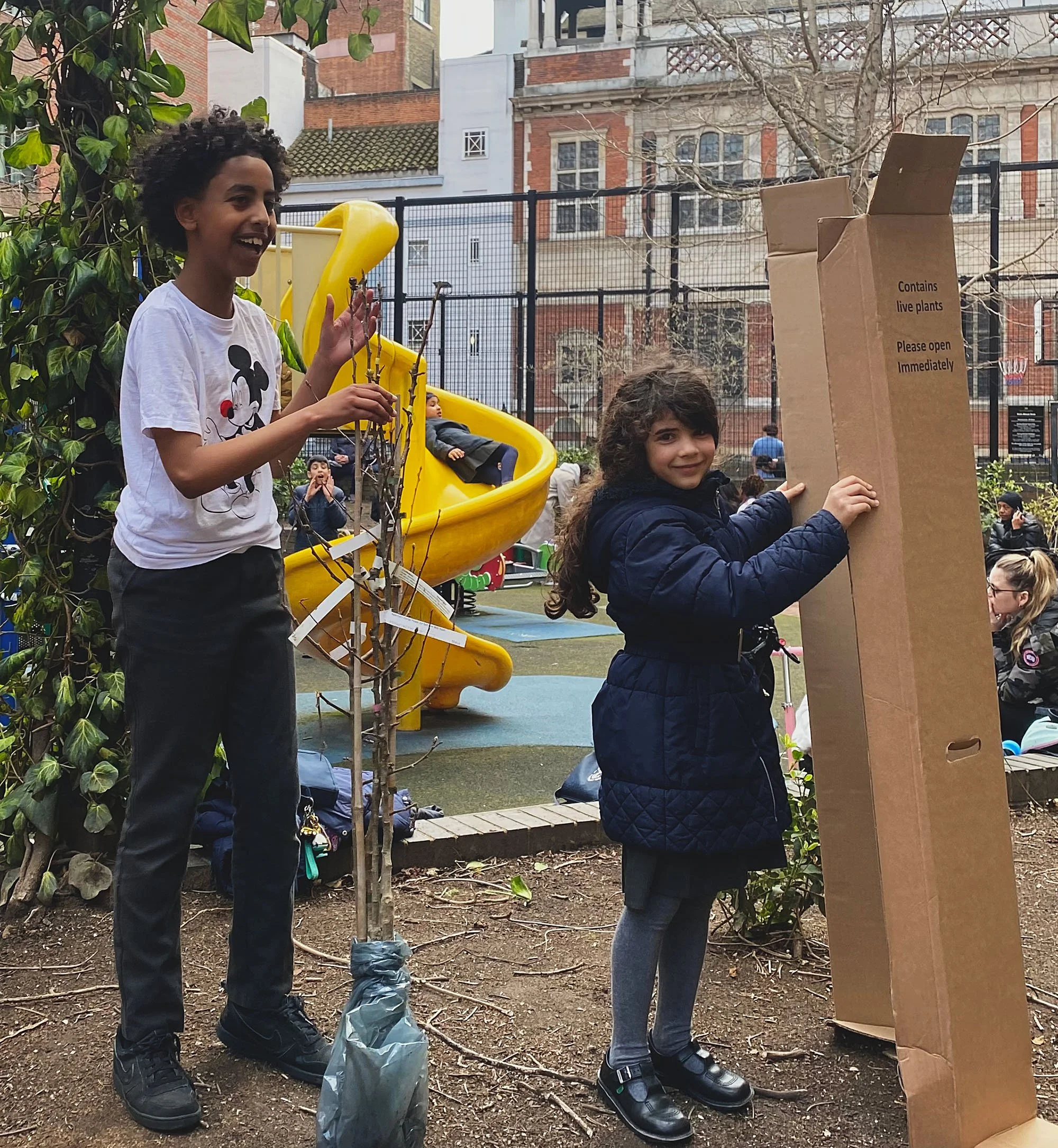
The Council also seeks to engage and enable residents and organisations to understand and increase their resilience to local climate impacts and extreme weather events. The ‘2022-2027’ project has and is doing this by measuring the excess heat temperatures at the Playground, involving the local community in planting new trees, and in inviting renowned plantsman Peter Korn to replant the space in natural washed sand, with help from pupils from the three nearest primary schools and local residents.
In this way, the Playground project will help mitigate the impacts of the ‘Open Space Deficiency’ and ‘Wild Life Deficiency’ identified by the Greening Westminster Fund.
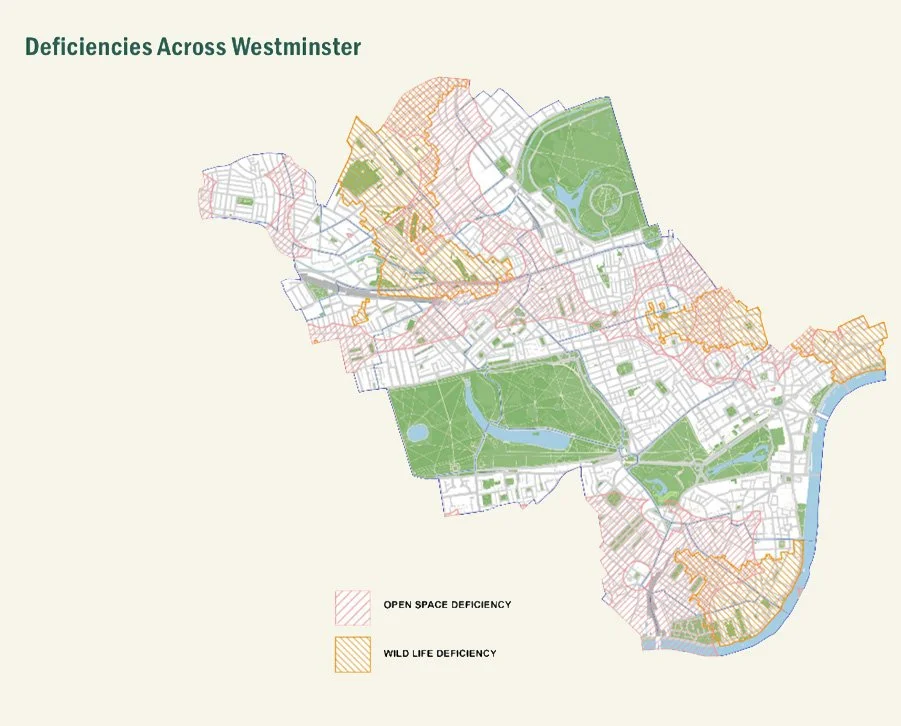
Wild West End is a partnership between West End property owners to improve biodiversity in central London by encouraging birds, bees, and bats back into the West End. The project aims to introduce green corridors between open spaces in the West End through the installation of new green roofs, planters, and street trees to allow wildlife to move freely between Westminster’s open spaces.
The ‘2022-2027’ project will represent a major new addition to the Wild West End map of green corridors and our Community Learning programme is generously supported by one of the core funders of Wild West End, Shaftesbury Capital.
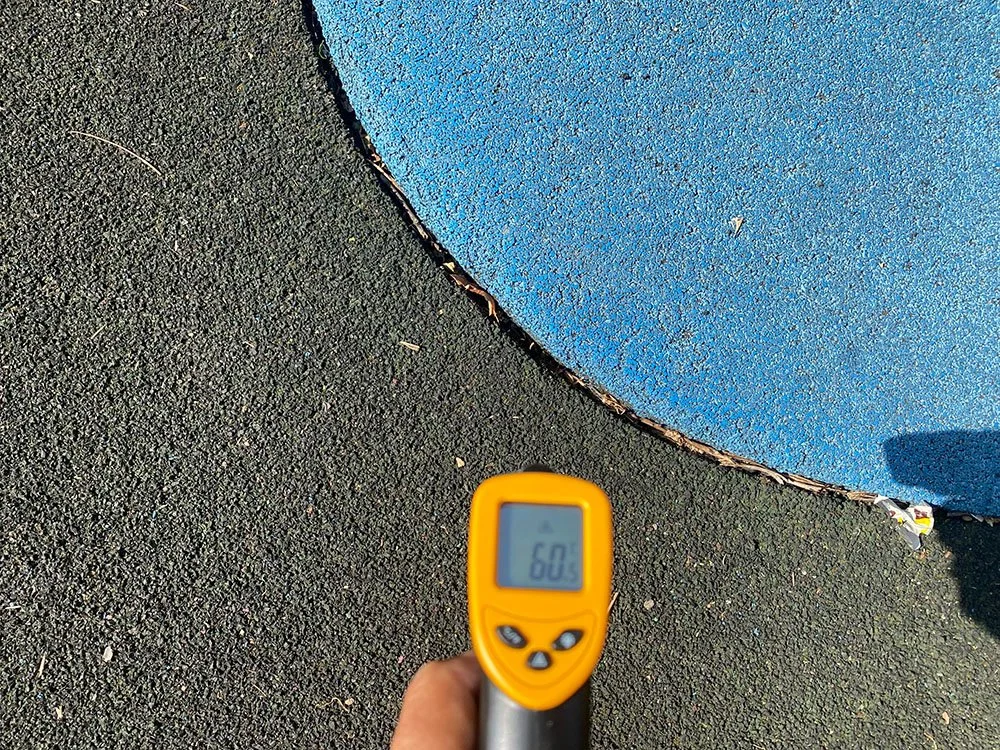
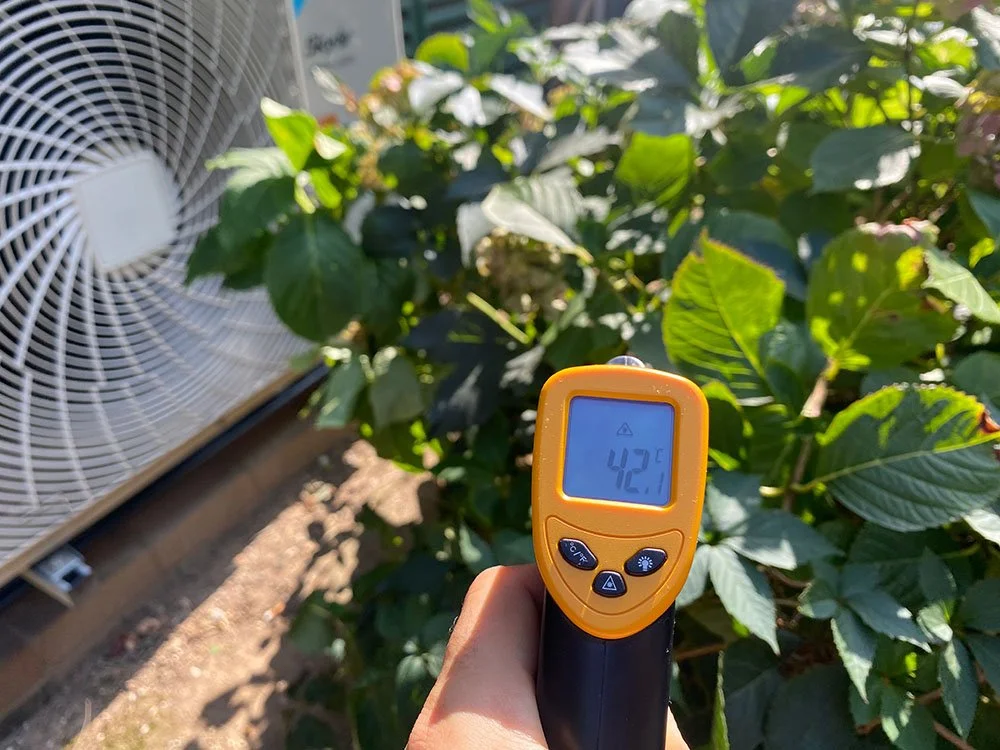
On Covent Garden’s hottest day of 2023, temperatures of 60.5°C were measured on the rubber play surface, 56.5°C on the play equipment, and 39°C near the hotel condenser units that face onto the Playground.
A landmark review of research into the heat-mitigating effects of green spaces during heatwaves has found that as climate breakdown fuels urban overheating, playgrounds have the potential to play a vital role in moderating the heat in the streets around them, promoting a more comfortable and cooler environment for urban residents, enhancing biodiversity, improving air quality by filtering pollution, and promoting overall sustainability.
Published in February 2024, the review is the most comprehensive of its kind and found that green playgrounds have an average cooling effect of -2.9C.
‘We have known for some time that green spaces and water can cool cities down. However, this study provides us the most comprehensive picture yet. What’s more - we can explain why. From trees providing shade, to evaporating water cooling the air.’ - Professor Prashant Kumar, Co-Director, Institute for Sustainability, Professor and Chair in Air Quality and Health; Founding Director, Global Centre for Clean Air Research (GCARE)
Replanting the Playground’s empty expanses of compacted soil in 2024 will enhance biodiversity, reduce the amount of direct sunlight reaching the ground and lower surface temperatures.
The new plants will improve air quality by filtering pollution and release moisture through evotranspiration, further cooling the surrounding air and creating a more comfortable microclimate which will help mitigate the Urban Heat Island effect.